
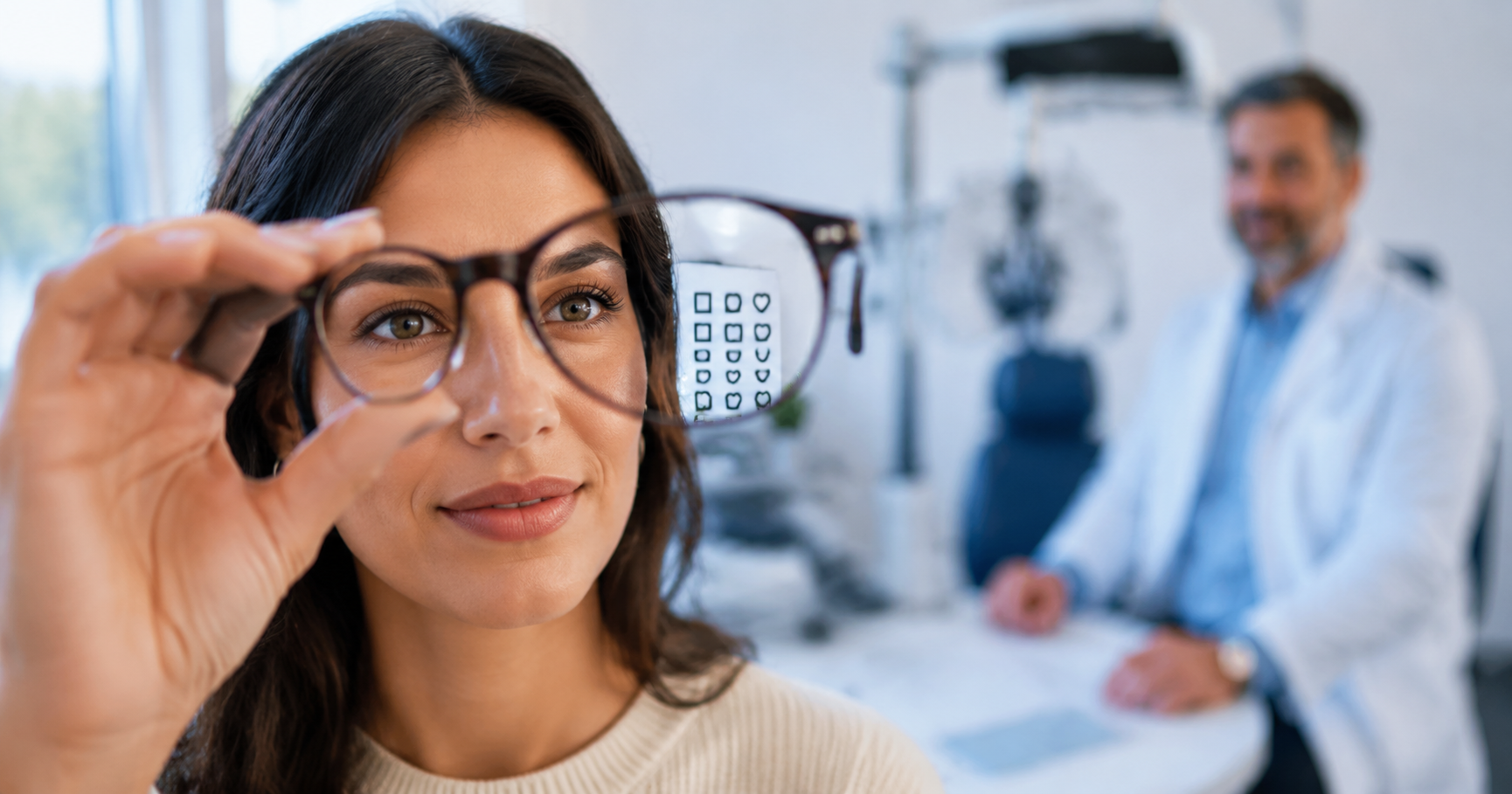
Glasses can make a significant difference when your eyes are having trouble focusing clearly. However, many people do not realize they may need glasses because vision changes can happen gradually. You might find yourself squinting at road signs, moving your phone farther away, experiencing headaches after screen use, or simply noticing that things do not look as sharp as they used to.
Sometimes, the signs are obvious. In other cases, you may adjust to the change in your vision and assume it is normal.
So, how do you know if you need glasses? The only way to know for certain is to have your vision assessed by an optometrist. However, several common signs indicate it may be time to schedule an eye exam.
1. Distant Objects Look Blurry
One of the most common signs that you may need glasses is difficulty seeing objects clearly at a distance.
You may notice that:
- Road signs are difficult to read.
- You cannot clearly see the board in a classroom.
- Faces across a room look blurry.
- Television subtitles are difficult to read.
- You need to sit closer to the TV.
These symptoms can be associated with myopia, commonly known as nearsightedness. People with myopia can usually see nearby objects more clearly but may have difficulty seeing objects farther away.
An eye examination can determine whether you have myopia and whether corrective lenses could improve your distance vision.
2. You Have Trouble Reading Small Print
Difficulty seeing nearby objects can also indicate that your vision needs correction.
You may find yourself:
- Holding your phone farther away.
- Moving books closer or farther away.
- Increasing the font size on your phone.
- Needing brighter light to read.
- Struggling to read menus or labels.
For adults, particularly those in their 40s and older, these changes may be associated with presbyopia, a natural age-related change that affects the eye’s ability to focus on nearby objects.
Depending on your vision needs, an optometrist may recommend reading glasses, prescription glasses, bifocals, progressive lenses, or another appropriate option.
3. You Squint Frequently
Squinting can temporarily make an image appear clearer by changing the amount of light entering the eye and improving focus.
If you frequently squint when looking at distant objects, reading, driving, watching television, or using a computer, your vision may need to be checked.
You may not even realize how often you are doing it until someone points it out.
Regular squinting does not automatically mean you need glasses, but it is a good reason to schedule an eye examination.
4. You Get Frequent Headaches
Vision problems can sometimes contribute to headaches, especially when your eyes are working harder to focus.
You may notice headaches after:
- Reading for a long time.
- Working on a computer.
- Using your phone.
- Driving.
- Studying.
- Doing detailed close-up work.
An outdated prescription, uncorrected refractive error, or difficulty focusing can sometimes contribute to eye-related discomfort.
However, headaches have many possible causes. An eye exam can help determine whether a vision problem may be contributing to your symptoms.
5. Your Eyes Feel Tired After Screen Use
Many people spend several hours each day looking at computers, tablets, and smartphones.
If your eyes regularly feel tired, sore, dry, or uncomfortable after screen use, it may be worth having your vision checked.
You may also experience:
- Temporary blurry vision.
- Difficulty focusing.
- Watery eyes.
- Dryness or burning.
- Headaches.
- Increased sensitivity to light.
Digital eye strain can occur even when your prescription is correct, so these symptoms do not automatically mean you need glasses. An optometrist can assess your vision and help determine whether an uncorrected vision problem is contributing.
6. You Have Difficulty Seeing at Night
Do you find nighttime driving more difficult than it used to be?
Difficulty seeing in low-light conditions, increased glare from headlights, or halos around lights can sometimes indicate a change in your vision.
You may be able to see reasonably well during the day but struggle to read signs or identify objects clearly at night.
An eye examination can assess your vision and help determine whether you need a prescription update or whether another eye health concern may be contributing to the problem.
Also read: How Often Should You Get an Eye Exam in Mississauga?
7. You Move Your Head or Body to See Better
Sometimes people unknowingly change their position to compensate for blurry vision.
For example, you might:
- Move closer to the television.
- Lean forward to read.
- Hold your phone farther away.
- Move your head to find a clearer angle.
- Sit closer to the front of a classroom.
These habits may suggest that your current vision is not as clear as it could be.
If you have noticed yourself changing how you position objects or your body to see them, consider booking an eye examination.
8. You Have Trouble Switching Between Near and Far Vision
Your eyes need to adjust when you move your focus from something close to something far away.
For example, you might look at your phone and then look across a room. If your vision takes longer than usual to become clear, or you frequently experience temporary blur when changing focus, your eyes may need to be assessed.
This can be particularly noticeable as people get older.
An optometrist can evaluate your focusing ability and determine whether glasses or another form of vision correction may help.
9. You See Double or Experience Blurry Vision
Double vision should not be ignored.
If you occasionally or frequently see two images instead of one, schedule an eye examination so the cause can be evaluated.
Blurry vision can also have many causes. It may be related to a refractive error, dry eye, changes in your prescription, or another eye condition.
If blurry or double vision develops suddenly, seek prompt medical attention rather than waiting for a routine appointment.
10. Your Current Glasses No Longer Feel Right
If you already wear glasses, you may notice that your vision is no longer as sharp as it once was.
You might find that:
- You need to hold objects closer to see them.
- Your distance vision has become blurry.
- You are squinting more often.
- You are experiencing headaches.
- Your glasses no longer feel comfortable for your daily activities.
These changes may mean your prescription needs to be updated.
An eye examination can determine whether your prescription has changed and whether your current lenses are still suitable.
11. You Have Difficulty Reading While Driving or Seeing Road Signs
Clear vision is particularly important for safe driving.
If road signs appear blurry, you have trouble reading street names, or you struggle to see clearly at a distance while driving, schedule an eye examination.
Nighttime driving can make vision problems more noticeable because of reduced lighting and glare.
If your vision is affecting your ability to drive safely, do not ignore the problem or rely on squinting.
12. You Have a Child Who Is Struggling at School
Children do not always know that their vision is not normal.
A child may assume that everyone sees the classroom board the same way they do. As a result, they may not tell their parents or teacher that they are having trouble seeing.
Possible signs of a vision problem in children include:
- Sitting very close to the television.
- Squinting.
- Rubbing their eyes frequently.
- Avoiding reading.
- Losing their place while reading.
- Complaining of headaches.
- Having difficulty concentrating on close-up work.
- Holding books very close to their face.
- Poor performance in activities that require clear vision.
A comprehensive eye examination can help identify vision problems and determine whether glasses or other treatment may be appropriate.
What Vision Problems Can Glasses Correct?
Glasses can correct several common refractive errors.
Myopia
Myopia causes distant objects to appear blurry while nearby objects are generally clearer.
Hyperopia
Hyperopia, or farsightedness, can make close-up vision difficult and may sometimes affect distance vision.
Astigmatism
Astigmatism occurs when the shape of the cornea or another part of the eye causes light to focus unevenly. It can result in blurred or distorted vision at different distances.
Presbyopia
Presbyopia is an age-related change in near focusing ability. It commonly becomes noticeable during the 40s and can make reading and other close-up tasks more difficult.
An eye examination is necessary to determine which type of refractive error you may have and what type of vision correction is appropriate.
Also Read: What Happens During a Comprehensive Eye Exam?
Can You Need Glasses Even If You Can See Clearly?
Yes.
Some people have mild vision problems that they have gradually adapted to. You may still be able to perform your daily activities but find that certain tasks require more effort than they used to.
For example, you may be able to read a road sign but have to squint to do so. You may be able to read a book but develop a headache afterward.
These subtle changes are worth discussing with an optometrist.
Also, having clear vision does not necessarily mean your eyes are healthy. A comprehensive eye examination assesses more than your need for glasses and can help identify certain eye health concerns.
How Does an Optometrist Determine If You Need Glasses?
The best way to determine whether you need glasses is through a comprehensive eye examination.
During the appointment, your optometrist may assess:
- Visual acuity.
- Near and distance vision.
- Refraction.
- Eye focusing ability.
- Eye movement and coordination.
- Eye health.
- Other factors based on your age, symptoms, and medical history.
During refraction testing, you may be shown different lens options and asked which provides clearer vision. These measurements help the optometrist determine whether you need corrective lenses and what prescription may be appropriate.
Your optometrist can also explain the different types of glasses available based on your lifestyle and vision needs.
Do You Need Glasses or Contact Lenses?
Glasses are not the only option for correcting refractive errors.
Depending on your prescription, eye health, lifestyle, and personal preferences, your optometrist may discuss contact lenses as another option.
Some people prefer glasses because they are easy to use and maintain, while others prefer contact lenses for sports, work, appearance, or convenience.
The right choice depends on your individual needs.
When Should You Get an Eye Exam?
You do not need to wait until your vision becomes significantly blurry before booking an eye examination.
You should consider an eye exam if you:
- Notice a change in your vision.
- Frequently squint.
- Experience recurring headaches or eye strain.
- Have difficulty seeing at night.
- Have trouble reading or focusing.
- Notice that your current glasses are no longer working well.
- Have not had an eye exam for several years.
- Have a medical condition or family history that increases your risk of eye problems.
Regular eye examinations are also important even if you do not currently have symptoms, because some eye conditions may develop without noticeable changes in vision.
How Often Should You Have an Eye Exam?
The recommended frequency depends on your age, eye health, medical history, family history, and individual risk factors.
Children generally require regular examinations because their eyes and visual systems are still developing. Adults with healthy eyes may require examinations every few years, while older adults and people with certain health conditions may need more frequent monitoring.
Your optometrist can recommend the appropriate schedule based on your specific needs.
Book an Eye Exam at Smart Opticals
Wondering whether you need glasses? The signs are not always obvious. Squinting, headaches, eye strain, difficulty seeing at night, blurry vision, or trouble reading can all be reasons to have your eyes checked.
At Smart Opticals, a comprehensive eye examination can help determine whether you need glasses, whether your current prescription needs to be updated, and whether any changes in your eye health require attention.
You do not have to wait until your vision becomes difficult to manage. If you have noticed changes in how clearly you see or it has been a while since your last eye exam, schedule an appointment with Smart Opticals.
Frequently Asked Questions
How can I tell if I need glasses?
Common signs include blurry vision, frequent squinting, headaches, eye strain, difficulty seeing at night, trouble reading small print, and difficulty seeing distant objects. The only way to confirm whether you need glasses is through an eye examination.
Can headaches mean I need glasses?
They can. An uncorrected refractive error or focusing problem may contribute to headaches, particularly after reading, screen use, or other visually demanding activities. However, headaches have many possible causes, so an eye exam can help determine whether your vision is contributing.
Do you need glasses even if your vision seems fine?
Yes. Mild vision changes can be difficult to notice because they often develop gradually. An eye exam can determine whether your vision is fully corrected and check the overall health of your eyes.
How do I know if my child needs glasses?
Watch for signs such as squinting, sitting close to the TV, holding books very close, frequent eye rubbing, headaches, difficulty reading, or problems seeing the classroom board. A comprehensive eye exam is the best way to determine whether a child needs glasses.
Do I need glasses for computer use?
Not necessarily. Some people experience digital eye strain without needing glasses, while others may have an uncorrected prescription or focusing problem. If screen use regularly causes blurry vision, headaches, or eye discomfort, an eye examination can help identify the cause.
Can glasses improve night vision?
If blurry vision at night is caused by an uncorrected refractive error, the appropriate prescription may improve visual clarity. However, night vision problems can have other causes, so an eye examination is important if you notice a significant change.
What happens if I don’t wear glasses when I need them?
Not wearing prescribed glasses can make certain activities more difficult and may contribute to symptoms such as eyestrain or headaches. For children, untreated vision problems can also interfere with visual development and learning. Your optometrist can explain whether you need to wear your glasses continuously or only for specific activities.