
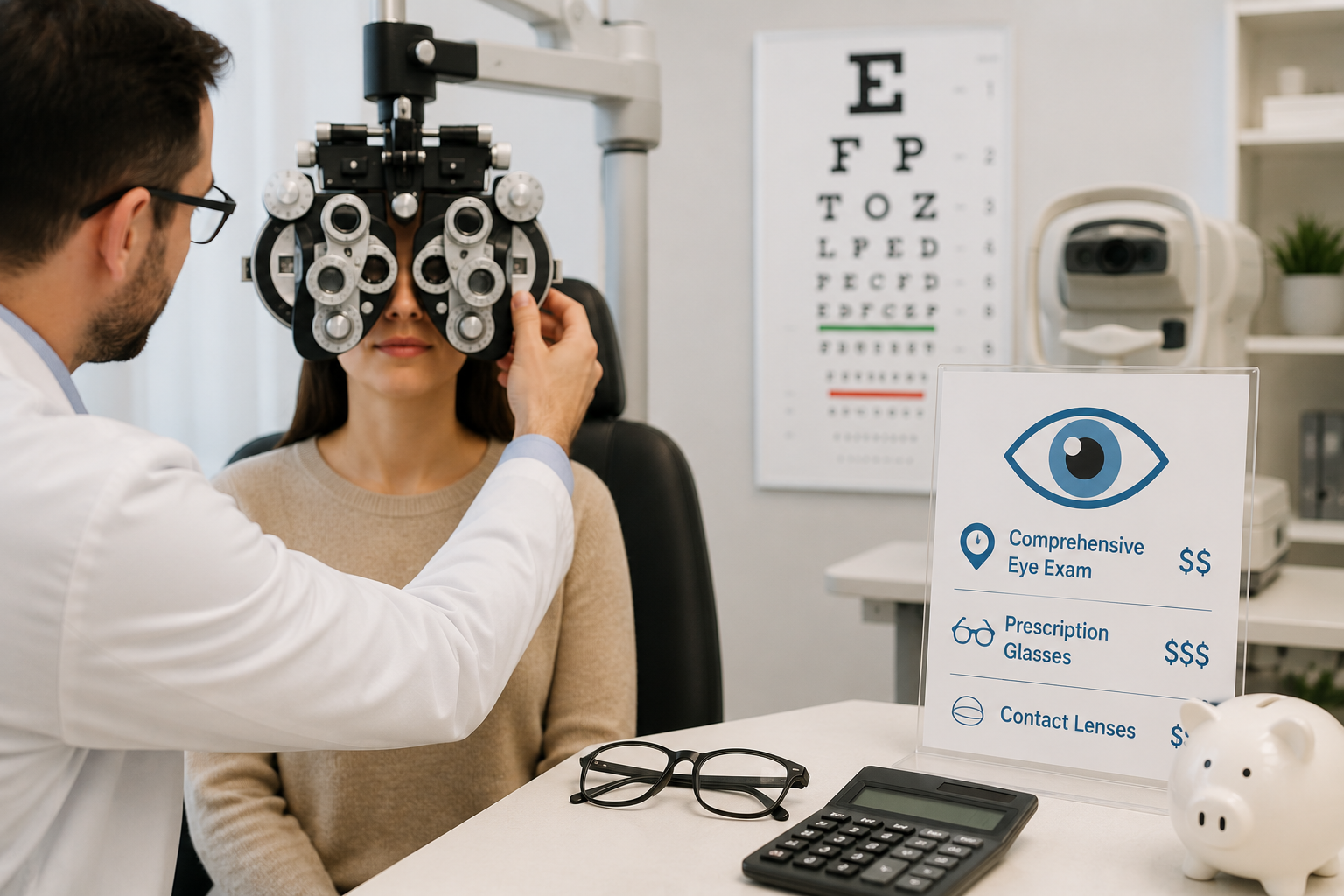
If you have been putting off a visit to the optometrist because you are not sure what it will cost, you are not alone. Eye care expenses can feel like a mystery, especially with Ontario’s OHIP coverage rules, which leave many adults paying out of pocket. Whether you are a long-time Mississauga resident or new to the city, this guide breaks down exactly what you can expect to pay for an eye exam, who gets coverage, and how to make the most of your vision care budget.
Breaking Down Eye Exam Costs in Mississauga
Eye exam pricing in Mississauga varies depending on the clinic, the technology used, and the type of exam performed.
A standard comprehensive eye exam typically ranges from $80 to $160 CAD for adults. Some clinics with advanced diagnostic imaging, such as OCT (optical coherence tomography) or retinal photography, may charge upwards of $200 to $250 for a fully loaded appointment.
Here is a rough pricing breakdown to give you a clearer picture:
Basic Comprehensive Eye Exam Price range: $80 to $100. This covers a standard vision and eye health check at most general optometry clinics.
Standard Comprehensive Exam at a Full-Service Clinic Price range: $100 to $160. Includes more thorough testing and may involve newer diagnostic equipment.
Comprehensive Exam Plus Contact Lens Assessment Price range: $160 to $210 and up. Ideal for contact lens wearers who need a fitting or prescription update alongside their eye health check.
Exam with Advanced Imaging (OCT or Retinal Scan) Price range: $200 to $250 and up. Clinics with high-end imaging tools charge more, but the added detail can catch conditions earlier and more accurately.
These are out-of-pocket prices for adults aged 20 to 64 who are not covered under OHIP. If you fall into a covered category, your costs could be significantly reduced or eliminated.
Does OHIP Cover Eye Exams in Mississauga?
This is one of the most common questions Ontarians ask. The answer depends on your age and health conditions.
Children Under 20
All children and teenagers under the age of 20 are fully covered by OHIP for one comprehensive eye exam per year.
Since some vision problems do not show obvious symptoms, these covered exams are critical for catching issues early. Early detection is especially important for conditions that could affect learning, reading, and classroom performance.
Seniors 65 and Older
Adults aged 65 and over qualify for OHIP coverage as well.
As of recent updates, seniors can access one comprehensive eye exam every 18 months if they are healthy, or one every 12 months if they have a qualifying medical condition. Vision problems such as cataracts, glaucoma, and macular degeneration become more common with age, which is why this group receives added provincial support.
Adults 20 to 64 with Medical Conditions
Most working-age adults between 20 and 64 are not covered for routine eye exams under OHIP. However, if you have been diagnosed with certain medical conditions, you may qualify for one OHIP-insured exam per year.
Qualifying conditions include:
Diabetes Patients with a confirmed diabetes diagnosis can access OHIP-covered exams. In some cases, coverage is available every six months, given the higher risk of diabetic eye disease.
Glaucoma: A confirmed glaucoma diagnosis makes you eligible. Note that being tested for glaucoma risk factors does not qualify on its own.
Cataracts: Cataracts that are significantly impairing vision qualify for coverage. Early-stage cataracts with minimal vision impact do not.
Progressive Retinal Conditions: Conditions such as retinal detachment or degeneration that are actively progressing qualify for coverage.
Progressive Corneal Conditions: Corneal ulcers, trauma, or other active conditions affecting the cornea are covered when progressing.
Optic Nerve Pathway Disease: Acute or progressive diseases affecting the optic nerve, such as a new stroke affecting vision or a pituitary tumour, qualify for coverage.
Active Uveitis: The condition must be active at the time of the exam. Past uveitis that is no longer active does not qualify.
Neurological Conditions Affecting Vision: Certain neurological diagnoses that impact eyesight may qualify. Your optometrist can confirm whether your specific condition is eligible.
Medications That Affect Eyesight: Some drugs prescribed for arthritis, malaria prevention, or mental health conditions require regular eye monitoring and qualify for OHIP coverage.
If you are unsure whether your condition qualifies, your optometrist can confirm your eligibility and guide you on the next steps.
Factors That Affect Eye Exam Pricing in Mississauga
Not every clinic in Mississauga charges the same rate. Several factors influence what you will end up paying.
The Optometrist’s Experience and Specialization
More experienced optometrists, or those with specialized training in areas like pediatrics, sports vision, or low vision care, may charge higher fees. You are paying for a higher level of expertise and a more targeted assessment.
Clinic Technology and Equipment
Clinics equipped with state-of-the-art diagnostic tools like OCT scanners, corneal topographers, or automated visual field testing machines often charge more. However, these tools provide more detailed and accurate results, which can be worth the extra investment.
Also read: How to Choose the Right Eyeglasses for Your Face Shape
Type of Exam
A basic vision check for glasses is far less involved than an exam that includes a contact lens fitting, a medical eye health evaluation, or a full ocular health assessment. The more comprehensive the exam, the higher the cost.
Location Within Mississauga
Urban clinics in high-traffic areas near Square One Mall or Mississauga City Centre may have slightly higher overhead costs, and this can be reflected in their pricing compared to neighbourhood clinics.
Additional Diagnostic Tests
Some procedures fall outside the standard exam fee. Visual field testing, retinal imaging, or corneal mapping may each carry an additional charge of $20 to $60 per test. Ask your clinic upfront whether any add-on tests are recommended and what they cost.
Does Private Insurance Help?
If you have employer-provided benefits or a private health insurance plan, there is a good chance your eye exam is at least partially covered.
Most group benefits plans reimburse eye exams at $75 to $150 per exam, typically once every 12 to 24 months, depending on your specific plan.
Before booking your appointment, it is worth checking a few things with your insurance provider.
Reimbursement Amount and Frequency: Find out how much your plan covers per exam and how often you are eligible. Some plans cover an exam once per year, others every two years.
Direct Billing Availability: Many Mississauga optometry clinics offer direct billing to major insurance providers. This means you pay nothing upfront, and the clinic handles the claim on your behalf.
Contact Lens Assessment Coverage: If you wear or are considering contact lenses, check whether your plan covers the contact lens portion of the exam separately.
Specialized Test Coverage: If your optometrist recommends additional diagnostic tests, check whether those fall under your plan’s medical or vision benefit before agreeing to them.
What Is Included in a Comprehensive Eye Exam?
When you pay for a comprehensive eye exam in Mississauga, you are getting far more than a simple prescription update. A full exam is a complete health assessment for your eyes and visual system.
Vision and Refraction Testing: Your optometrist measures how clearly you see at near and far distances and determines whether you need corrective lenses or an updated prescription.
Eye Health Evaluation: The retina, optic nerve, and cornea are examined for early signs of disease. This can reveal conditions that have no symptoms in their early stages.
Intraocular Pressure Testing: Pressure inside the eye is measured to screen for glaucoma, one of the leading causes of vision loss in adults.
Eye Coordination and Focusing Tests: Your optometrist checks that both eyes are working together properly. Poor coordination can cause headaches, eyestrain, and difficulty reading.
Review of Medical and Ocular History: Your optometrist will ask about your overall health, family history, and any medications you are taking. These details help identify risk factors that may affect your vision over time.
In some cases, your optometrist may also dilate your pupils to get a better view of the back of the eye, or use imaging tools to capture detailed photographs of your retinal structures. These steps can reveal systemic health issues like high blood pressure and diabetes, making a comprehensive eye exam a valuable investment in your overall health.
A standard exam typically takes between 30 and 60 minutes.
Tips for Managing Eye Exam Costs in Mississauga
Check Your OHIP Eligibility First: Many people do not realize their health condition qualifies them for covered exams. Confirm with your optometrist before assuming you need to pay out of pocket.
Use Your Insurance Benefits Before Year-End: Most vision plans reset annually. If you have unused coverage, do not let it lapse. Book your exam before December 31.
Ask About Direct Billing: Direct billing removes the hassle of submitting claims yourself. Most reputable eye clinics in Mississauga offer this service.
Compare Clinics Before Booking: While price should not be your only consideration, it is perfectly reasonable to call a few clinics and ask about their exam fees and what is included.
Do Not Skip Exams to Save Money: Delaying eye exams can allow conditions to progress undetected. Catching an issue early is almost always less costly and less disruptive than treating it at an advanced stage.
Book Your Comprehensive Eye Exam at Smart Optical
Whether you need a routine vision check, are experiencing changes in your eyesight, or want to stay proactive about your eye health, choosing the right eye care provider makes all the difference. At Smart Opticals, our experienced optometrists provide comprehensive eye exams using modern diagnostic technology to help detect vision changes and eye conditions early. We also offer personalized eyewear recommendations and convenient direct billing to many insurance providers for a hassle-free experience.
If you’re looking for a trusted provider for an eye exam in Mississauga, contact Smart Opticals today to schedule your appointment. Our friendly team is here to help you protect your vision with professional, patient-focused eye care for the whole family.
Frequently Asked Questions
How often should I get an eye exam?
Most adults should have a comprehensive eye exam every one to two years. However, your optometrist may recommend more frequent visits if you have vision changes, wear contact lenses, or have certain eye health concerns.
What is included in a comprehensive eye exam?
A comprehensive eye exam typically includes vision testing, a prescription check, an eye health assessment, glaucoma screening, eye coordination testing, and a review of your medical and vision history. Additional imaging may be recommended if needed.
How long does an eye exam take?
Most comprehensive eye exams take 30 to 60 minutes, depending on your individual needs and whether additional tests are required.
Does vision insurance cover the cost of an eye exam?
Many private vision insurance plans cover all or part of the cost of an eye exam. Coverage varies by provider, so it’s a good idea to review your benefits before booking your appointment.
Are contact lens exams included in a regular eye exam?
Not always. A contact lens fitting or evaluation is often a separate service because it requires additional measurements and testing. Ask your clinic if this is included in the exam fee.
Can an eye exam detect health problems other than vision issues?
Yes. A comprehensive eye exam can help detect early signs of conditions such as glaucoma, cataracts, macular degeneration, diabetes-related eye disease, and even certain systemic health conditions before symptoms develop.
Do I need an eye exam if my vision seems fine?
Yes. Many eye diseases develop without noticeable symptoms in their early stages. Regular eye exams help detect problems early and protect your long-term vision.
Should I bring my current glasses or contact lenses to my appointment?
Yes. Bringing your current glasses, contact lenses, previous prescriptions, and a list of medications helps your optometrist accurately assess your vision and eye health.
What factors affect the cost of an eye exam in Mississauga?
The price can vary based on the type of exam, the technology used, whether additional diagnostic tests are required, and whether services such as contact lens fittings or retinal imaging are included.