
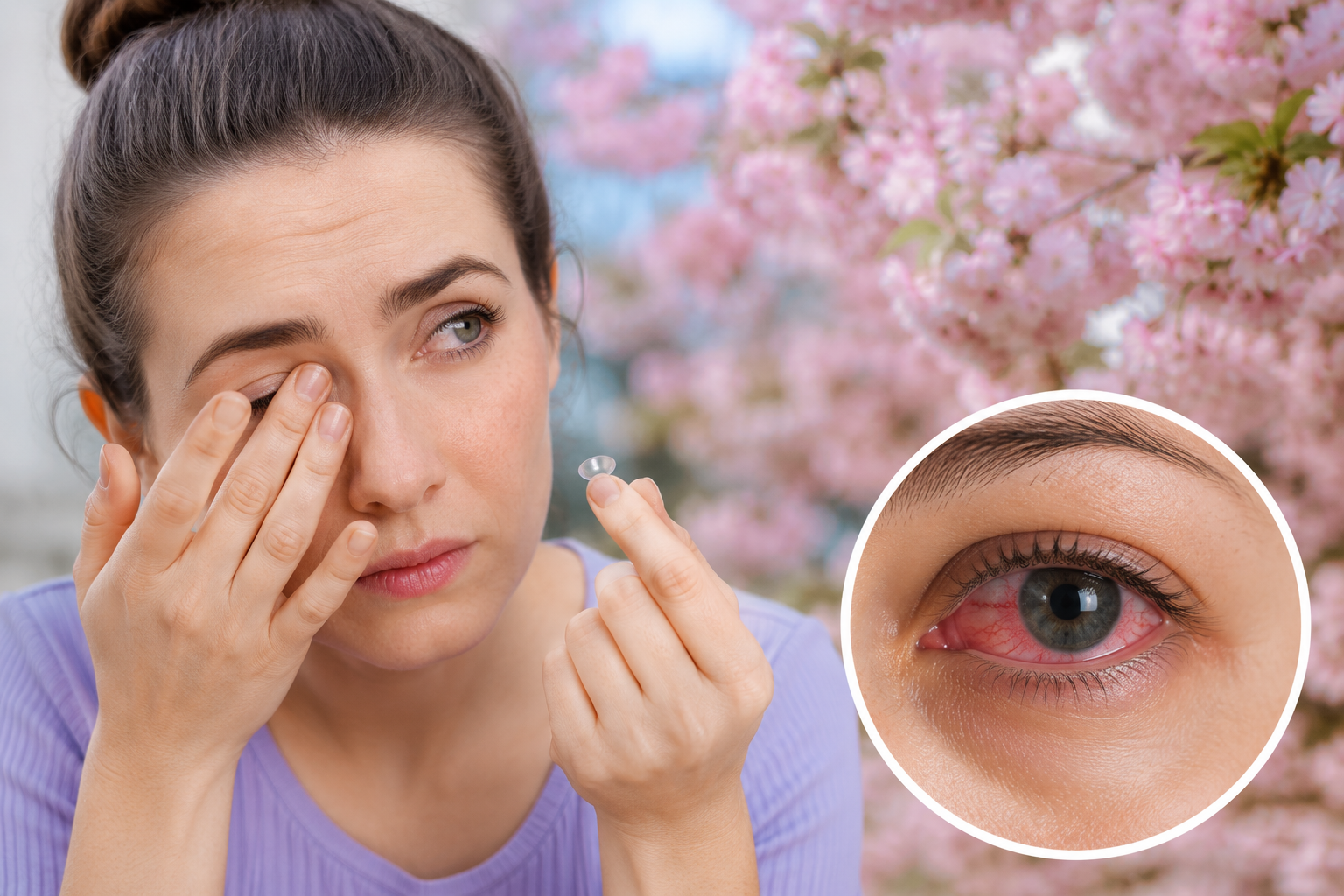
Spring is meant to feel refreshing—longer days, open windows, and time outdoors. But if you wear contact lenses and deal with seasonal allergies, the experience can be very different.
It often starts early. Your eyes itch before your morning coffee is done. By midday, your lenses feel dry and uncomfortable. By evening, you’re counting down the minutes until you can take them out.
So, do you have to take out your contact lenses every spring?
Not necessarily.
Most people can continue wearing contact lenses during allergy season—but only with the right approach. The key is understanding what’s happening to your eyes and making a few smart adjustments to stay comfortable.
Why Spring Allergies Feel Worse with Contact Lenses
Airborne allergens like pollen trigger seasonal allergies. When these particles come into contact with your eyes, your immune system releases histamines—causing itching, redness, watering, and swelling.
Contact lenses make this more noticeable for two main reasons:
- They trap allergens: Pollen and dust can stick to the surface of your lenses instead of being flushed out naturally
- They worsen dryness: Allergies disrupt your tear film, making lenses feel dry, gritty, or irritating
This combination is why many contact lens wearers find spring especially challenging.
In fact, studies suggest that 40% to 60% of contact lens users experience allergy-related eye discomfort during peak seasons. So if your lenses suddenly feel worse in spring, there’s a real reason behind it.
Can You Still Wear Contact Lenses During Allergy Season?
Yes, but it depends on how your eyes are reacting.
If your symptoms are mild, you can usually continue wearing lenses with a few adjustments. But if your eyes are severely irritated, it’s better to take a break.
A simple way to decide:
- Mild symptoms: Continue wearing contacts with precautions
- Moderate discomfort: Reduce wear time or switch between glasses and lenses
- Severe irritation: Remove lenses and allow your eyes to recover
Trying to “push through” discomfort doesn’t help—it often makes symptoms worse and increases the risk of complications.
What Actually Helps (Expert-Backed Tips)
These are practical, proven strategies that can significantly improve comfort during allergy season.
1. Switch to Daily Disposable Lenses
Daily lenses are often the best option for allergy sufferers.
A fresh pair every day means:
- No buildup of pollen or debris
- Better hygiene
- Improved comfort throughout the day
If you struggle every spring, this one change alone can make a noticeable difference.
2. Reduce Your Wear Time
Even if your lenses feel fine in the morning, symptoms can build as the day goes on.
- Avoid wearing lenses for long hours
- Remove them at the first sign of discomfort
- Use glasses on high-pollen days
Giving your eyes regular breaks can prevent irritation from escalating.
3. Use Contact Lens–Safe Lubricating Drops
Dryness is one of the biggest issues during allergy season.
Using lubricating drops designed for contact lenses can:
- Restore moisture
- Reduce friction
- Help flush out irritants
Avoid using regular eye drops unless they are approved for use with lenses.
4. Be Strict with Lens Hygiene
Allergy season is not the time to cut corners.
- Wash and dry your hands thoroughly before handling lenses
- Clean and disinfect reusable lenses properly
- Replace your lens case regularly
- Never exceed recommended wear schedules
Even small hygiene mistakes can worsen already sensitive eyes.
5. Minimize Pollen Exposure
Reducing allergen contact can make a big difference.
- Wear sunglasses outdoors to block pollen
- Keep windows closed during high-pollen days
- Shower and wash your face after being outside
- Avoid rubbing your eyes
These small habits help prevent allergens from building up on your lenses.
6. Consider Antihistamine Eye Drops (With Guidance)
If symptoms persist, antihistamine eye drops can help control the allergic response.
However:
- Some drops require removing lenses before use
- It’s best to consult an eye care professional for the right option
Using the correct treatment safely is essential for long-term comfort.
When It’s Better to Switch to Glasses
Some days, your eyes simply need a break—and that’s completely normal.
Choose glasses if you notice:
- Persistent redness or inflammation
- Constant watering
- A burning or gritty sensation
- Blurred vision that doesn’t improve
Alternating between glasses and contact lenses during allergy season is often the most practical and comfortable solution.
When to See an Eye Care Professional
Not all discomfort is caused by allergies alone.
You should book an eye exam if:
- Symptoms continue even without wearing lenses
- Your vision becomes blurry or unstable
- You experience pain instead of mild irritation
- Discomfort returns every time you wear contacts
An eye care professional can assess your eye health, recommend better-suited lenses, and rule out underlying issues.
Final Thoughts
Wearing contact lenses during spring allergies isn’t about forcing through discomfort; it’s about adapting.
For some people, that means switching to daily lenses. For others, it means wearing contacts less often or relying on glasses during peak allergy days. The right approach is the one that keeps your eyes comfortable and healthy.
As allergy seasons become longer and more intense, being proactive matters more than ever.
Pay attention to how your eyes feel, adjust your routine when needed, and don’t ignore persistent discomfort. With the right habits, you can enjoy clear, comfortable vision—even during allergy season.